
HealthTech · AI · Research
AI Skincare Platform
A research-driven AI ecosystem for personalised skincare, grounded in user reality.
- Role
- UX Researcher & Product Designer
- Timeframe
- 10 Weeks
- Domain
- HealthTech
- Tools
- Figma · ChatGPT · Claude · User Interviews
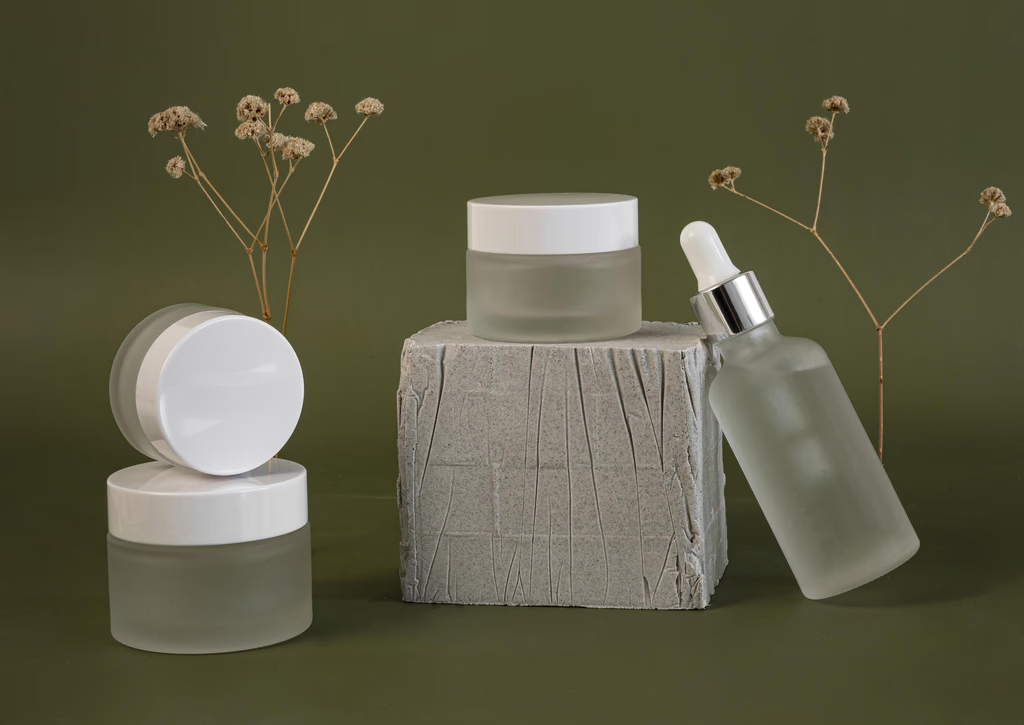
What we were up against.
Skincare recommendations online are noisy, brand-biased, and rarely tuned to individual skin behaviour over time.
"A HealthTech founder wanted an AI-first skincare product that avoided the trust gap most beauty tech falls into."
Grounding insight from discovery — the sentence that shaped every design decision.
Six lenses on the same problem.
A thinking model I bring to every project — six disciplines used as lenses, not metaphors.
Studied why past beauty-AI products lost trust — over-claiming, brand bias, black-box recommendations.
Mapped skin behaviour across climates, seasons, and routines, not just faces.
Designed the recommendation loop as a feedback system with clear input, output, and correction paths.
Made ingredient reasoning legible — what interacts, what conflicts, what compounds over time.
Anchored the product in skin as a living, changing organ rather than a static image.
Framed the personalisation loop as a Bayesian update: prior → observation → refined recommendation.
From Market research to personalized skin wellness experiences.
- 01
Problem Discovery
Investigating unsafe skincare practices, misinformation, and the gaps in personalized skin health guidance.
- 02
User Research
Conducting primary and secondary research to understand user behaviors, pain points, and skincare decision-making patterns.
- 03
Insight Synthesis
Creating personas, mapping journeys, and identifying opportunity areas across the skincare ecosystem.
- 04
Experience Design
Designing user flows and low-fidelity concepts for personalized recommendations and guided skincare journeys.
- 05
AI-Powered Solution Design
Crafting intelligent experiences for skin analysis, ingredient education, and personalized product recommendations.
- 06
Validation & Iteration
Testing concepts with users, refining features, and iterating based on evidence and feedback.
- 07
Final Product Vision
Delivering a holistic skin wellness platform that empowers users to make informed, safe, and confident skincare decisions.
Situation
A HealthTech founder wanted an AI-first skincare product that avoided the trust gap most beauty tech falls into.
Task
Lead 10 weeks of research and design to define the product, its personalisation loop, and a shippable v1.
Action
Ran generative research, mapped skin-journey archetypes, designed an AI recommendation loop with clear provenance, and prototyped the onboarding-to-routine experience.
Result
Delivered a validated product concept, a personalisation architecture, and a v1 design ready for engineering handoff.
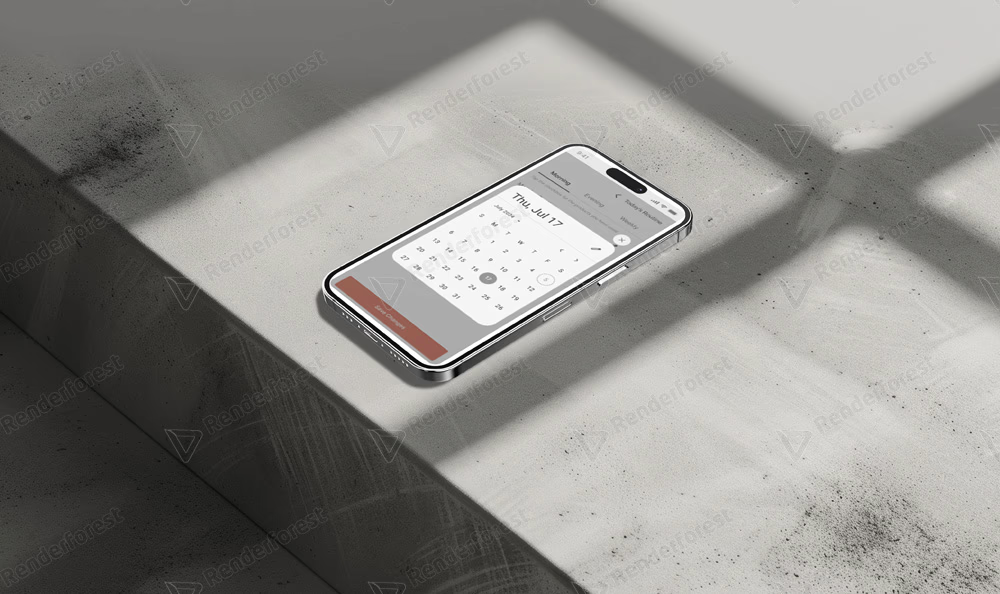
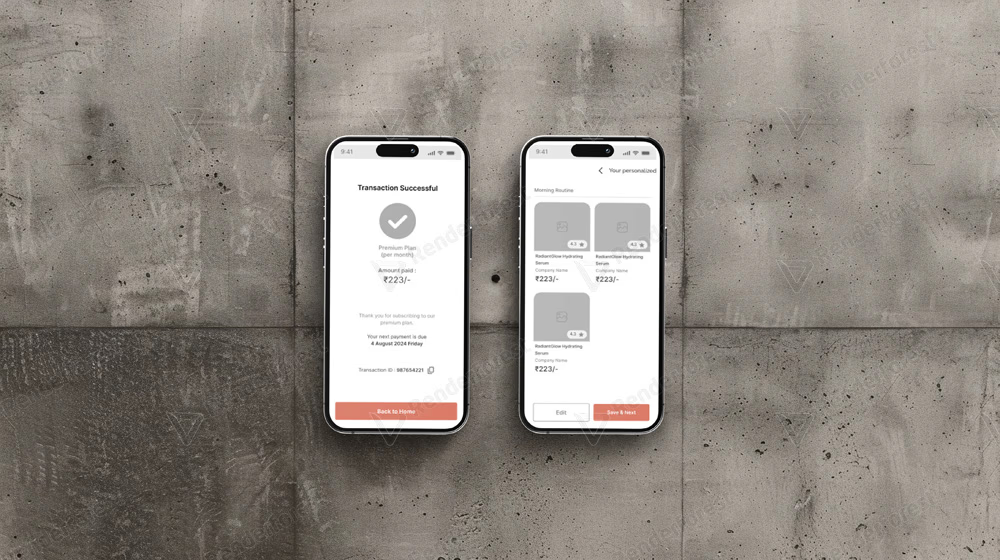
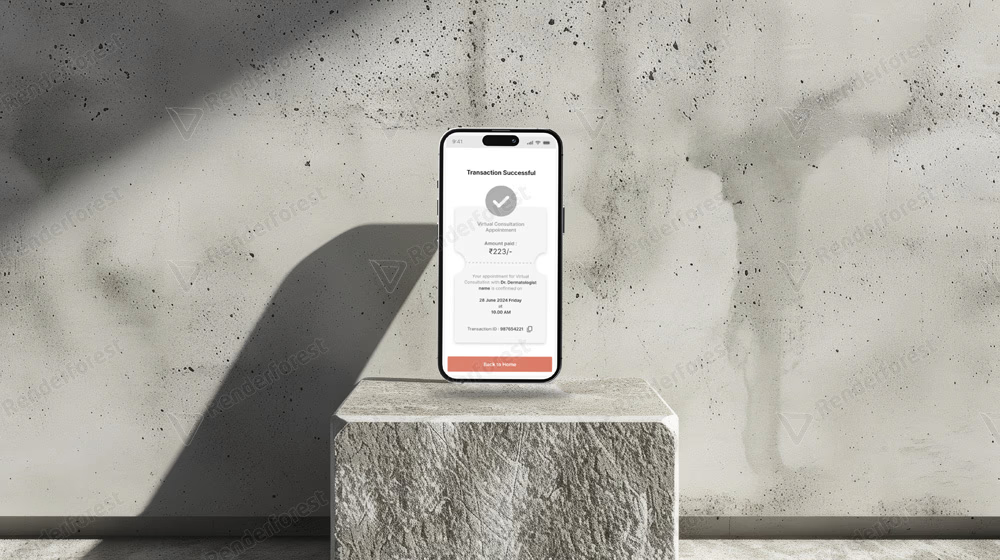
Selected surfaces.
Outcomes, honestly labelled.
Research participants
Personalisation loops
Concept validation
What I'll carry into the next project.
- 01
AI trust comes from provenance, not accuracy claims.
- 02
In health-adjacent products, the recommendation is the product.
- 03
Longitudinal loops beat one-shot quizzes.
Interested in working together?
Selective full-time, consulting, and advisory work in enterprise SaaS, healthcare, mobility, and AI.
Next project
Namma Yatri
Reducing cancellations in an open-mobility marketplace through service design.
View case study